Reviewed by Stephen Hopkins, CTO Last updated

Automated subtitles and captions

Upload the video. Review the captions.
Export any format.

Sonix transcribes the audio, times every word and hands you polished subtitles and captions in minutes, in 54+ languages.

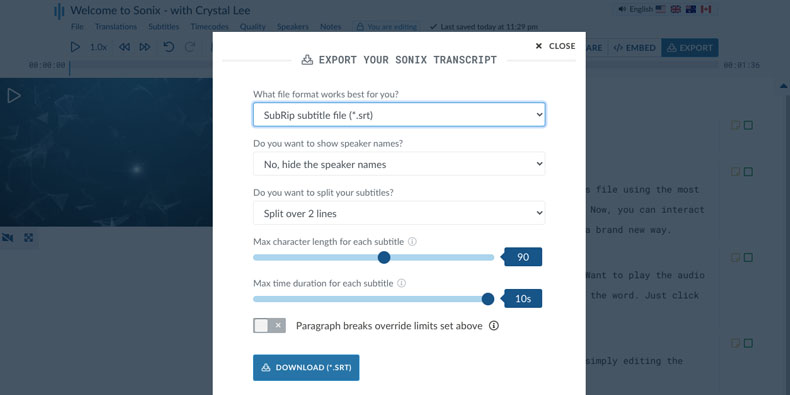
Export SRT, VTT or TTML for YouTube, Vimeo and social platforms, hand editor-ready files to Premiere Pro or Final Cut Pro, or burn the captions straight into the video.

30 minutes free, no credit card required.See pricing

99% accuracy on clear audio
18+ export formats
54+ languages
SRT, VTT, TTML and burn-in
Subtitle Features

Everything you need for
professional subtitles

Automatic Subtitle Generation

Upload your video and Sonix automatically generates subtitles with precise timing. No manual transcription required: our AI does the heavy lifting.

Automatic Subtitle Generation

SRT & VTT Export

Export subtitles as SRT, VTT or TTML, accepted by YouTube, Vimeo, Facebook and every major platform.

SRT & VTT Export

Perfect Timing Synchronization

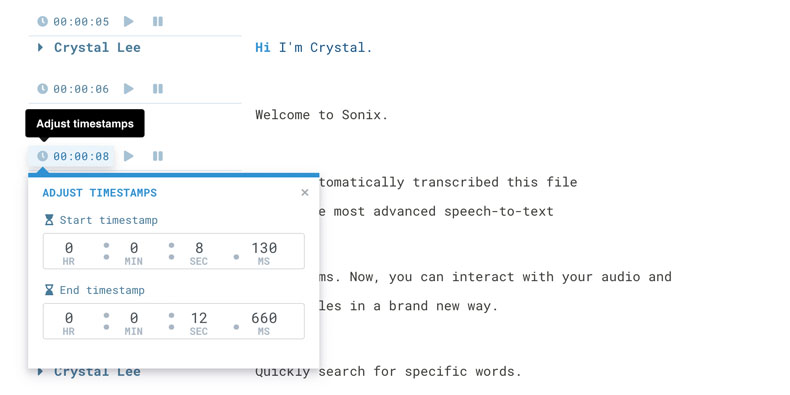
Word-level timestamps ensure subtitles appear at exactly the right moment. Adjust timing easily in our online editor if needed.

Perfect Timing Synchronization

Video Editor Integration

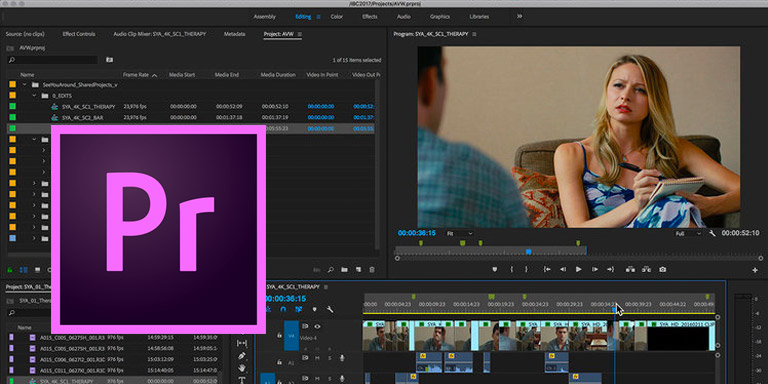
Export subtitles for Adobe Premiere Pro, Final Cut Pro, DaVinci Resolve, and Avid Media Composer. Professional formats like FCPXML supported.

Video Editor Integration

Burn-In Captions

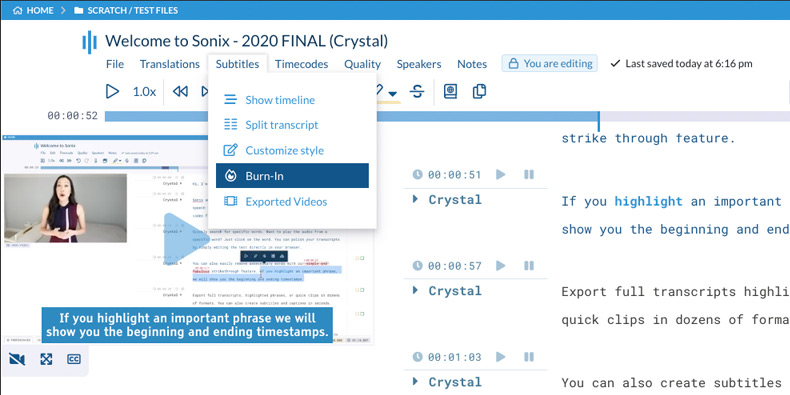
Add permanent, hardcoded subtitles directly to your video. Customize font, size, color, and position. Download ready-to-share video files.

Burn-In Captions

For a closer look at the timeline view, styling controls and export options, explore the Sonix subtitle editor.

How it works

Subtitles in four steps

1

Transcribe

Upload your video or audio file. Sonix's speech recognition converts every spoken word into text, in 54+ languages, at 99% accuracy on clear audio. An hour of video is typically transcribed in about 5 to 6 minutes.

2

Align timestamps

Sonix records word-level timestamps during transcription, then splits the transcript into subtitle blocks that appear and disappear in sync with the speaker. You control line length and duration, so captions stay readable instead of racing past the viewer.

3

Edit

Review the subtitles next to your media in the browser. Fix a name, adjust a timestamp, or split and merge subtitle blocks before anything is published. Because the AI does the first pass, editing is a quick polish, not a from-scratch job.

4

Export

Download your subtitles in the format your destination needs: SRT or VTT for video platforms, TTML for broadcast workflows, FCPXML for Final Cut Pro, XML for Adobe Premiere Pro, or a video file with the captions burned in.

That is the entire pipeline: transcribe, align, edit, export.

Why every video needs subtitles

Subtitles stopped being optional the moment social feeds started autoplaying video on mute.

Viewers scrolling in public, at work or in bed read your video before they ever hear it. No captions usually means no watch time.

The audience math goes further than muted playback. Captions serve deaf and hard-of-hearing viewers, non-native speakers who follow written text more easily than fast speech, and anyone watching in a noisy environment. Search engines and platform algorithms cannot listen to your audio either, but they can read a transcript and a subtitle file.

The only real argument against subtitling everything has been the labor. Typing out dialogue and timing it by hand takes several times the runtime of the video itself. Automated subtitles remove that cost: the transcription and timing happen in minutes, and your team only reviews and exports.

Which subtitle format to use

Subtitle files carry the same three things, the text, when it appears and when it disappears; the format decides where you can use them.

SRT (SubRip) is the plain-text standard almost everything accepts. If you only export one file, make it an SRT. New to the format? Start with our guide to SRT files.

VTT (WebVTT) is the web-native format used by HTML5 video players. It behaves like SRT with extra support for text styling and positioning cues, a WEBVTT header line, and periods instead of commas in its timestamps. Converting between SRT and VTT keeps the text and timing intact in both directions, though VTT's styling and positioning cues are dropped on the way to SRT. Sonix exports both from the same transcript, so "SRT vs VTT" is rarely a hard choice: use VTT for web players, SRT everywhere else. Already holding the wrong file type? Follow our VTT to SRT conversion guide.

TTML is an XML-based format common in broadcast and OTT streaming delivery specs. Sonix exports it alongside SRT and VTT.

SUP is different: it stores subtitles as images rather than text, and it is the subtitle format found on Blu-ray discs. Because there is no text inside a SUP file, platforms like YouTube cannot read it and the wording cannot be edited directly.

Burned-in (hardcoded) captions are not a file at all. The text is rendered permanently into the video's pixels, so it plays everywhere and viewers cannot turn it off. This is the workhorse for social feeds, where videos autoplay muted. Sonix can burn subtitles into video for you, with your choice of font, size, color and position.

Formats at a glance

Five formats, side by side

Where each subtitle format works, and whether you can still edit the text.

FormatBest forPlatform supportEditable text?
SRTUniversal default, video platforms, editorsYouTube, Vimeo, Facebook, LinkedIn, Premiere Pro, most playersYes
VTTWeb and HTML5 video playersBrowsers, YouTube, Vimeo, web streamingYes
TTMLBroadcast and OTT deliveryBroadcast systems, streaming specsYes
SUPBlu-ray disc authoringBlu-ray players; not accepted by web or social platformsNo (image-based)
Burned-inSocial video, muted autoplay, guaranteed displayEvery platform and deviceNo (permanent)

Sonix exports SRT, VTT, TTML, FCPXML, Premiere Pro XML and burned-in video. SUP is listed so you can tell it apart; the route from SUP to SRT is below.

Converting SUP to SRT

SUP files contain images, not text, so getting them onto the web means running OCR or regenerating them from the audio track.

If you have Blu-ray subtitles in SUP format and need them on the web, they must be converted to a text format first. Since SUP files contain images, the conversion requires OCR to read the text out of each subtitle frame, which is error-prone with stylized fonts.

In many cases the faster, cleaner route is to skip conversion entirely: run the video through Sonix and generate a fresh, accurately timed SRT from the audio itself. Our step-by-step SUP to SRT conversion guide walks through both options.

Captions, subtitles and SDH: what is the difference?

The three terms get used interchangeably, but they solve different problems.

Subtitles

Subtitles are a translation or transcription of the dialogue, written for viewers who can hear the audio but do not understand the language or want reading support. They carry speech only.

Captions

Captions are written for viewers who cannot hear the audio. Closed captions (CC) can be toggled on and off by the viewer; open captions are burned into the picture and always visible. In US usage, "captions" implies accessibility: they include speaker changes and meaningful sounds, not just dialogue.

SDH

SDH (Subtitles for the Deaf and Hard of Hearing) combines both. SDH looks like subtitles but adds the non-speech information captions carry: speaker identification, sound effects and music cues. SDH is the standard deliverable for streaming platforms and the safest choice when accessibility is a requirement.

When is each required?

If your audience simply watches with sound off, standard subtitles or burned-in captions are enough. If you are meeting accessibility obligations, publishing to streaming services or serving deaf and hard-of-hearing viewers, you need captions or SDH. Sonix labels speakers automatically and gives you the editor to add sound effects and music cues before export; see our SDH subtitle creation page for the full workflow.

How do you add automated subtitles on each platform?

The generation step is identical everywhere, upload to Sonix, review, export; what changes is the file you export and where it goes.

YouTube

Export your subtitles as SRT or VTT, open YouTube Studio, and upload the file under Subtitles for your video. Sonix's timing is precise enough for direct upload, and unlike YouTube's auto-captions, you have already corrected names, terminology and punctuation before the video goes public. Full walkthrough: how to add subtitles to a YouTube video.

Adobe Premiere Pro

Export an SRT from Sonix and import it into your Premiere Pro project, where it lands on the captions track ready for styling, or use Sonix's XML export to bring the transcript directly into your edit. From there you can restyle captions or burn them into the export. Step by step: how to add subtitles in Premiere Pro.

Final Cut Pro

Sonix exports FCPXML, Final Cut Pro's native interchange format, so your subtitles arrive as proper caption roles with timing intact rather than as pasted text. Import the file, assign the caption role, and adjust appearance inside Final Cut Pro. Guide: how to add captions in Final Cut Pro. Editing in iMovie instead? Use our iMovie captions and subtitles guide.

TikTok, Reels and Shorts

Vertical video changes the rules: most viewers watch muted, sidecar subtitle files are unreliable across social apps, and the safe zone is narrow. Burn the captions in. Generate subtitles in Sonix, pick the 9:16 story canvas, style them with a large font and a high-contrast color, keep them centered above the caption and UI overlays, and download the finished video. One upload works identically on TikTok, Instagram Reels and YouTube Shorts. See also: adding captions to Reels.

Web players, course platforms and Vimeo

For video embedded on your own site, an LMS or Vimeo, export VTT, the format HTML5 players read natively. Upload the VTT alongside the video and the player handles the caption toggle, which keeps the text selectable, searchable and accessible to screen readers in a way burned-in captions are not. Most course platforms and enterprise video hosts accept SRT as well, so exporting both formats from the same Sonix transcript covers every embed.

What do WCAG and the ADA require for captions?

Public-facing video usually has to be captioned.

The Web Content Accessibility Guidelines (WCAG) are the reference standard for digital accessibility. WCAG 2.1 Success Criterion 1.2.2 (Level A, the minimum conformance level) requires captions for all prerecorded audio content in synchronized media. Success Criterion 1.2.4 (Level AA, the level most organizations target and most regulations reference) extends the requirement to live audio content.

In the United States, the Americans with Disabilities Act (ADA) has repeatedly been applied to digital content, and organizations have faced legal complaints over uncaptioned video. Government agencies, universities and broadcasters face additional obligations under Section 508 and FCC captioning rules. This page is not legal advice, but the practical takeaway is consistent: accurate captions on published video are the baseline expectation, not a nice-to-have.

Compliance-grade captions must be accurate, synchronized and complete, including speaker identification and relevant sound information, which is exactly what SDH provides. Automated generation plus a human review pass in the Sonix editor is the fastest way to get there. For the broader picture of accessible media, read our guide to making web content accessible.

Subtitles in other languages

Yes, and this is where automation pays off twice: Sonix transcribes in 54+ languages and translates finished transcripts into 54+.

Generate native subtitles for content recorded in Hindi, Spanish, Japanese, Arabic and dozens more, not just English. The transcript comes back in the language's own script, timed word by word, ready to split into subtitle blocks of any length.

To reach new audiences, translate your subtitles instead of re-recording. Sonix's automated translation converts finished transcripts into 54+ languages with a side-by-side view for review, and the subtitle timing carries over, so a translated SRT is minutes away from the original.

We keep dedicated workflow guides for the languages creators ask about most, including Bengali subtitles, Urdu subtitles, Tamil subtitles and Hindi subtitles. Each covers the same core pipeline with language-specific notes on scripts and fonts.

One practical tip for multilingual output: keep one corrected master transcript, then translate from it. Fix an error once and every language version inherits the fix, instead of correcting the same mistake six times.

By the numbers

Subtitles by the numbers

Accuracy
Sonix reaches 99% accuracy on clear audio, comparable to professional human transcription.
Speed
One hour of video is subtitled in about 5 to 6 minutes, faster than real time.
Formats
18+ export formats, including SRT, VTT, TTML, FCPXML and burned-in video.
Languages
Transcribe in 54+ languages, then translate the subtitles into 54+ languages.
Rating
4.98 average rating from 211 customer reviews.
Free trial
30 minutes free to test with your own footage, no credit card required.
Common questions

Subtitle questions, answered

How do automated subtitles work?

Automated subtitles are generated by speech recognition. The software transcribes the audio, attaches a timestamp to every word, and splits the text into timed subtitle blocks that display in sync with the speech. With Sonix you then review the result in an online editor and export it as SRT, VTT, TTML, or a video with burned-in captions.

What is an SRT file?

An SRT (SubRip Subtitle) file is a plain-text file containing numbered subtitle blocks, each with a start time, an end time and the caption text. It is the most widely supported subtitle format: YouTube, Vimeo, Facebook, LinkedIn and every major video editor accept SRT uploads. Sonix generates an accurately timed SRT from any video.

What is the difference between subtitles and closed captions?

Subtitles transcribe or translate dialogue for viewers who can hear the audio. Closed captions are designed for viewers who cannot hear it, so they add speaker identification and meaningful sounds, and can be switched on or off in the player. If your goal is accessibility or regulatory compliance, you need captions or SDH rather than plain subtitles.

What does SDH mean in subtitles?

SDH stands for Subtitles for the Deaf and Hard of Hearing. SDH subtitles include everything standard subtitles carry plus speaker labels, sound effects and music cues, giving deaf and hard-of-hearing viewers the full context of a scene. Sonix labels speakers automatically, and you add sound effect and music cues in the editor before export; see the SDH subtitles page for details.

How do I add subtitles to a video?

Upload the video to Sonix and let the AI generate a timed transcript. Review it in the editor, then either export a subtitle file (SRT or VTT) to upload alongside your video on platforms like YouTube, or burn the captions permanently into the video file for social feeds. The whole process typically takes a few minutes per video.

How do I convert SUP to SRT?

SUP files store subtitles as images, so converting them to SRT requires OCR software to read text out of each frame, and results often need heavy cleanup. The alternative is to regenerate: upload the video to Sonix and produce a fresh SRT from the audio with clean text and timing. Our SUP to SRT guide covers both methods.

Can I translate subtitles?

Yes. Sonix translates finished transcripts into 54+ languages while preserving subtitle timing, so you can export an SRT for each target language from a single source video. A side-by-side view lets you or a native-speaking reviewer polish the translation before export. Learn more on the translation page.

Are automated subtitles accurate enough to publish?

On clear audio, Sonix reaches 99% accuracy, which is comparable to professional human transcription. Background noise, crosstalk and heavy accents reduce accuracy for any system, which is why Sonix pairs automation with an editor for a fast human review pass. For public, branded or compliance-sensitive video, a quick review before export is always recommended.

Customer Reviews

Trusted by creators worldwide

4.98 rating from 211 reviews

Your transcription tool is amazing. It's easy to use and gave me a great result.
MI
Marcio I.
Rio de Janiero, Brazil
I was simply awed by speed and accuracy of your transcription service.
MK
Myung K.
Queens, NY, USA
I'm very impressed about the accuracy. The transcript needs a little editing, but just minor correction. I think the interface is straightforward and user-friendly. I also like the...
JZ
Jane Z.
New York, NY USA
The title says it all. Sonix is the simplest, the most accurate transcription service I have ever tried. Even quiet or muffled speech is perfectly produced. If you need one, this i...
OO
Ozkan O.
Istanbul, Turkey
Sonix provided the best transcription of all the platforms I have tested so far.
KS
Katherine S.
Paris, France
I was amazed by your accuracy. What I used were not very good recordings. One with an American accent, another one Australian and many background noises. The transcript exc...
AZ
Andrew Z.
Hammersmith, United Kingdom
Get started

Your subtitles, in minutes

Upload a video, watch Sonix subtitle it, and export in the exact format your platform needs. Your first 30 minutes are free, no credit card required.

Other great features by Sonix

The complete platform for
audio & video intelligence

99% accuracy. Every word matters.

AI transcription and translation in 54+ languages.